
Okeechobee County Crime News Sources
Lake Okeechobee News is the strongest recurring local source found in the research. Its Okeechobee County Arrest Report columns appeared in Wednesday editions and covered selected felony and DUI arrests. The reports attributed arrests to agencies such as the Okeechobee County Sheriff’s Office, Okeechobee Police Department, Florida Highway Patrol, Florida Fish and Wildlife Conservation Commission, Florida Department of Corrections, and task-force units. This is selective reporting, not a full jail feed.
The reviewed columns were text-led rather than mugshot galleries. They typically identified the reported arrest date, agency, booked allegation, and bond information when stated. Individual news stories may carry an OCSO-supplied image or an image labeled as an old booking photograph, but a photo is not guaranteed. The paper also stresses that an arrest is not a conviction and offers a correction route for later not-guilty results or dropped charges. That editorial practice makes the column useful context, though the Okeechobee Clerk still holds the case outcome.
The local Okeechobee section shows how the outlet organizes county reporting.
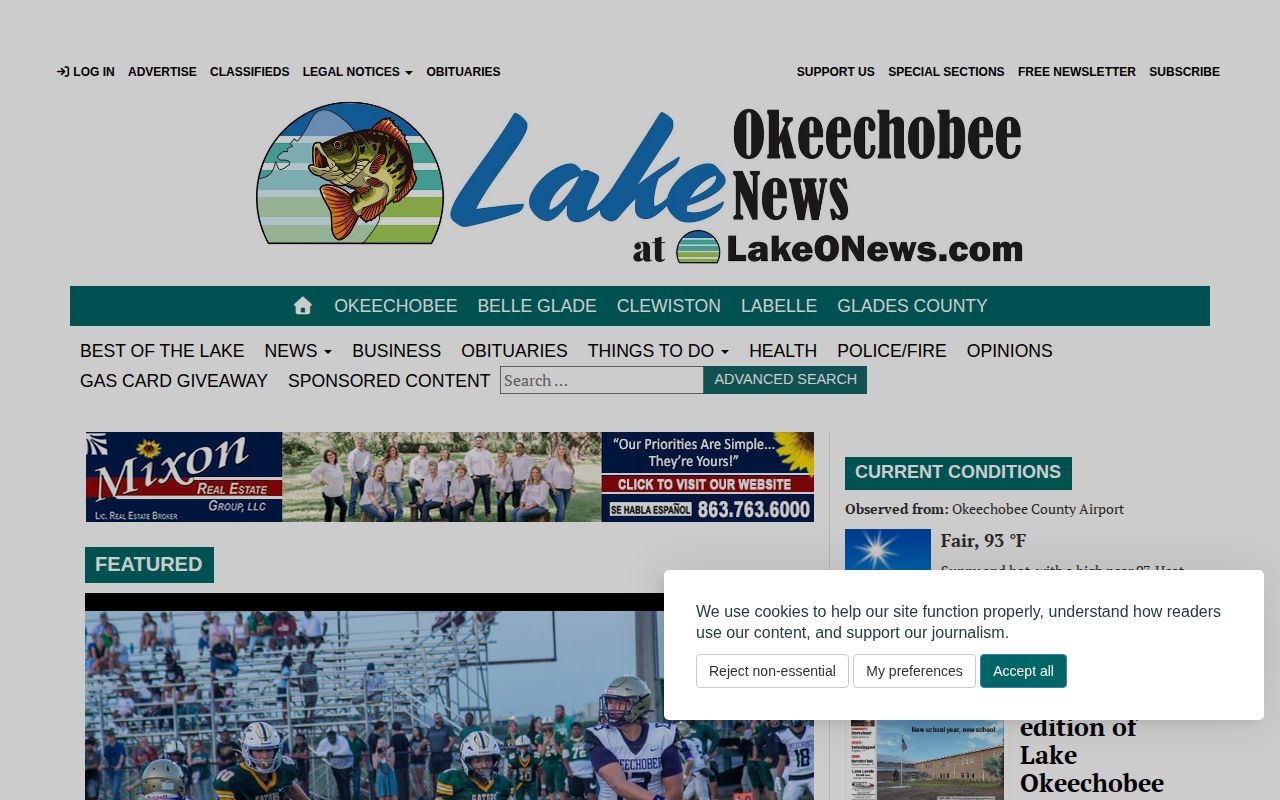
A column like this can pin down a date and an agency. It cannot prove current custody or a final case result, so the jail and the Clerk remain the go-to sources for those answers.
Okeechobee County Arrest News Outlets
Start with official sources and trusted local reporters. Save unofficial booking aggregators for later. Their data can lag, repeat itself, or go stale. Nothing replaces OCSO for custody and booking records, and nothing replaces the Clerk for a court result.
| Outlet | Coverage | Photos? | Where |
|---|---|---|---|
| OCSO | Mixed press and community posts, not a full arrest log | May use agency media | Press releases |
| Lake Okeechobee News | Recurring selective felony and DUI reports plus local stories | Not guaranteed; reports are text-led | Okeechobee section |
| WOKC | Frequent weekday local roundups and episodic arrest stories | Varies by story | News |
| WPTV | Regional and event-driven county news | Sometimes agency imagery | County page |
| WQCS | Event-driven public-safety reports | Often agency or scene images | WQCS News |
| RecentlyBooked | Unofficial rolling county booking display | Often, from copied booking data | County page |
| Busted Newspaper | Unofficial chronological county-tagged booking posts | Yes on observed cards | County page |
| Mugshots.com | Okeechobee-titled shell; no dated cards visible in research | No current local display verified | Search shell |
| Arrests.org | Direct county shell showed zero results | No active coverage verified | County shell |
WPBF publishes occasional TV reports, not a running roster. No genuine Okeechobee County page for Mugshots.zone could be confirmed. JailExchange did not show a complete live county feed either. Knowing those limits beats guessing at links or overstating what a site covers.
Weekly Okeechobee County Arrest Reports
Lake Okeechobee News gives the county its most distinctive news rhythm. Its Wednesday arrest columns appeared across several months. That points to a roughly weekly schedule, though gaps happen. Coverage sticks to selected felony and DUI arrests, not every person booked into Okeechobee County Jail. It can include arrests by city, county, state, and specialized units.
Don't confuse dates. A Wednesday report may describe something from days earlier. Bond figures reflect what was reported at one point, not whether anyone paid or got released. Charges can also change once a prosecutor looks at the case. For same-day or multi-day booking, use the county-wide roster and feed treatment, which notes that no separate official OCSO 24-hour, 48-hour, 72-hour, or weekly feed was verified.
For city-specific digging, Okeechobee Busted Mugshots separates the OPD police report from the OCSO jail intake record. A county-tagged article alone proves nothing. It does not show OPD made the arrest or that it happened inside city limits.
No official OPD blotter was verified either. City arrest reporting therefore stretches across several systems. The police department may hold the incident report. The Sheriff runs the adult jail and its intake record. The Clerk tracks the prosecution. State agencies can also make arrests that land in the same jail. Reading the arresting-agency field beats guessing jurisdiction from an Okeechobee dateline.
Official Okeechobee County Crime News
The OCSO press archive collects agency releases, public-information posts, and community material. It gives you the agency's own account of an event. It is not a booking log, and OCSO does not claim it lists every arrest. The official Sheriff app also shares press and social material, though its listing does not advertise inmate, warrant, recent-booking, or mugshot searches.
Agency statements usually land before a case ends. Attribute the claim to the agency and note the release date. A booked charge is a booking fact, not an established act. Check later reporting against the Clerk docket, especially when charges get amended, declined, dismissed, or resolved by plea or trial.
Important: For what a case actually became, check the filed court disposition.
Okeechobee County News Mugshots
How do booking photos end up in the news? A reporter usually gets one from an agency release or a Florida public-records request. The Okeechobee County Sheriff’s Office handles those requests. It can redact or withhold material the law protects. No verified online roster-photo policy exists, so assume nothing. Some inmate results may not show a face at all. Some outlets skip the image entirely and run a text-only report.
Florida’s public-record law allows inspection and copying, but with exemptions. Juvenile files, sealed or expunged records, victim material, medical information, intelligence, security concerns, and active investigations can all trigger limits. A narrow adult booking request should name the person and give an approximate booking date. Ask for the booking photograph in its native electronic form. The record custodian makes the final call on release.
One more wrinkle matters. Section 901.43, Florida’s commercial booking-photo statute, targets paid removal practices by covered publishers. It does not order agencies or newspapers to erase lawful reporting. Good crime coverage keeps context and follows up on outcomes rather than pasting copied photos into a permanent gallery.
Unofficial Okeechobee County Mugshot Pages
Third-party sites fill the gap the sheriff leaves open. RecentlyBooked advertises a rolling 30-day county view and stamps a last-updated time. Busted Newspaper, meanwhile, lays out chronological county booking cards. Those descriptions belong to the publishers alone. They say nothing about OCSO’s schedule, whether county coverage is complete, who is still in custody, or how a case ended. Names, dates, charges, agency labels, and photos can arrive late or linger after a person has been released.
The RecentlyBooked Okeechobee County page captures one unofficial source’s county listing.
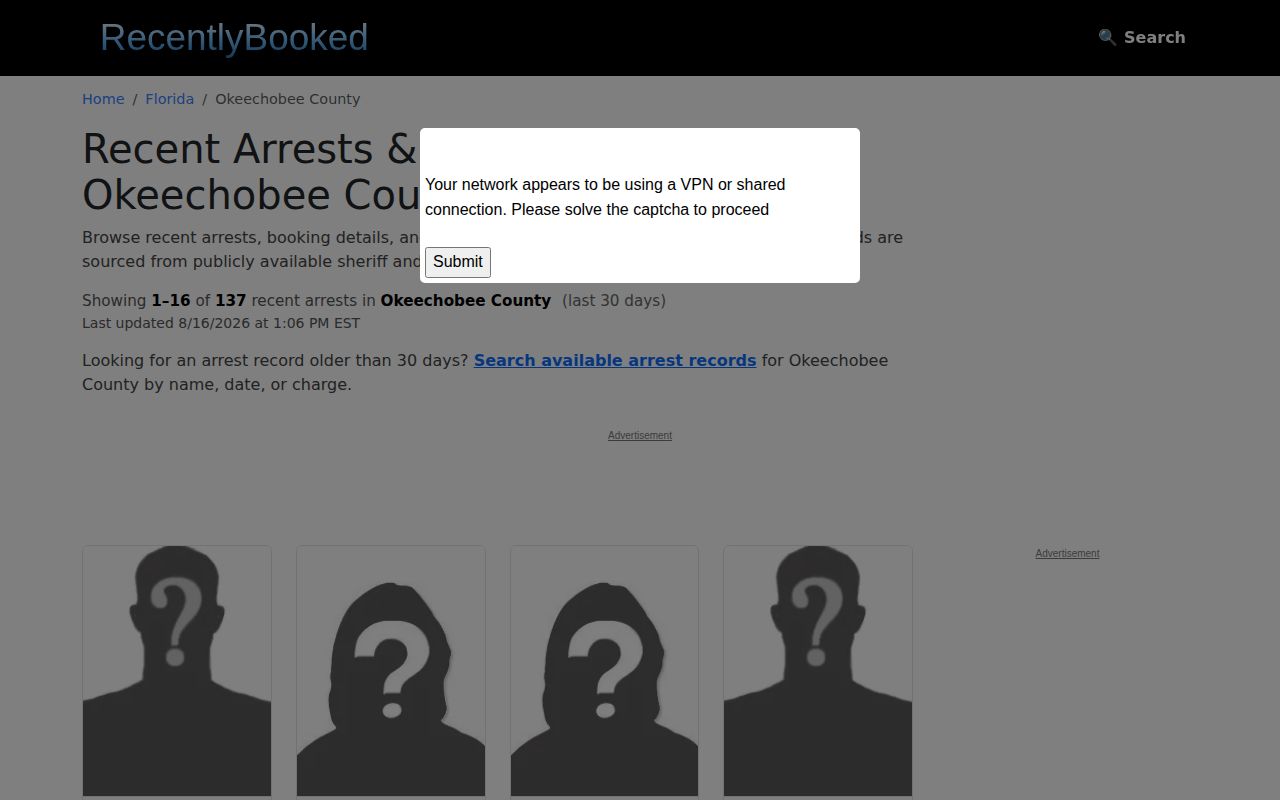
A screenshot only shows how a page is formatted. Confirm the arresting agency, booking, custody, and charge with OCSO. Then take the final case result to the Okeechobee Clerk.
Other unofficial pages came up thin. Mugshots.com held an Okeechobee-labeled shell with no dated cards in view. Arrests.org’s direct shell returned zero results, and Okeechobee was missing from its county menu. No usable Mugshots.zone county section appeared either. An empty shell proves nothing about local arrests, so treat it as a dead end rather than evidence.
Trace Okeechobee County Arrest News
A news story is where the search starts, not where it ends. The official record path keeps three things separate: current custody, the original booking document, and the eventual court result. No single article or aggregator card answers all three. Work each question with the office that owns that answer.
- Record the source details. Note the person’s name, reported arrest date, arresting agency, and any case or booking number. Keep the story’s publication date separate.
- Check current county custody. Use the OCSO inmate-search landing page. If its interface does not render, call Booking at 863-357-5343 for current bond, booked charges, and status.
- Request the booking record. Ask OCSO Records for the existing booking sheet, arrest affidavit, release record, and booking photograph. If OPD made the arrest, request its incident report separately from Police Records.
- Open the court case. Search the Clerk-linked OCRS portal for filed charges, later entries, and disposition. Obtain a certified disposition when a conclusive document is needed.
The official court-search interface is the last online step in that chain.
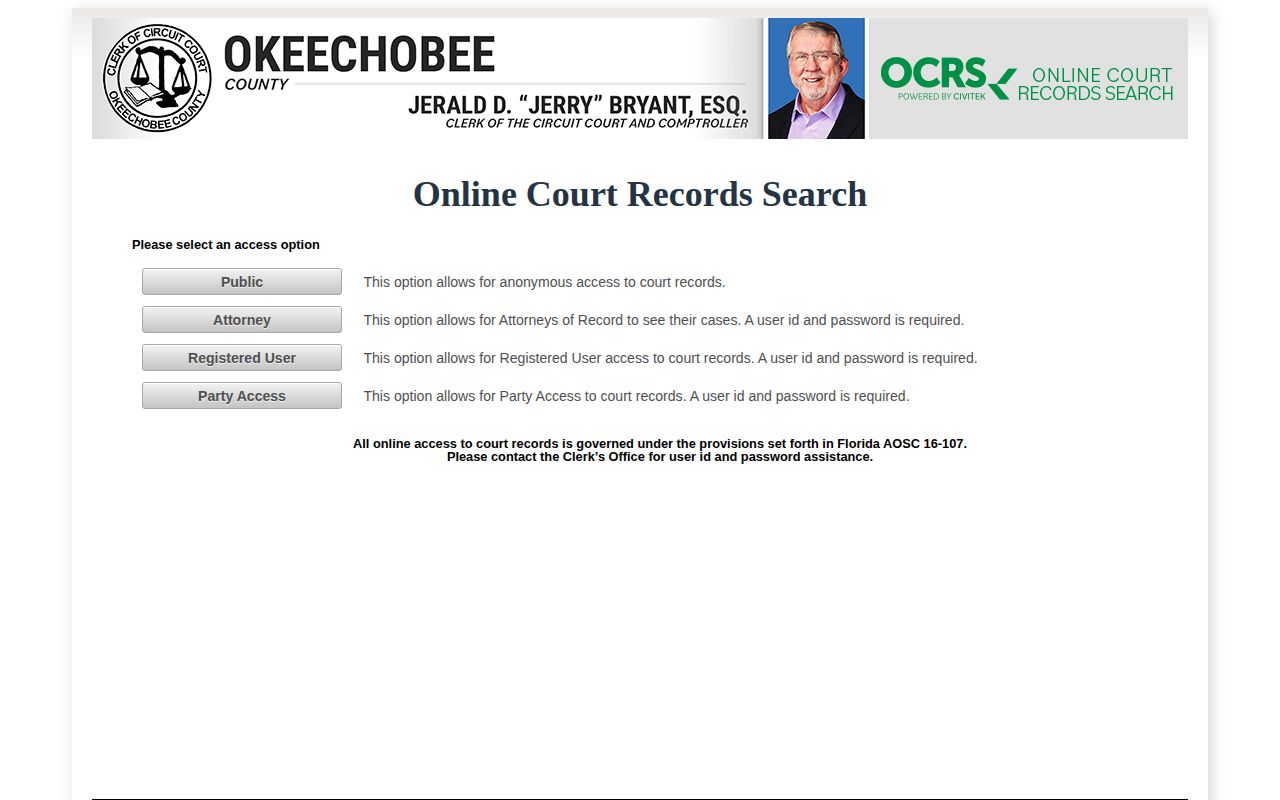
Florida Rule of Criminal Procedure 3.130 generally gets an unreleased arrestee in front of a judge within 24 hours. That first appearance covers rights and release conditions. It does not settle anything else. The case’s real result shows up in later docket entries, so that’s where to look.
The daily court docket does a different job. When populated, it lists a case name, courtroom, and start time, but it works as a schedule rather than a historical record of outcomes. The Clerk’s criminal OCRS portal is separate from “Official Records,” which mostly covers recorded instruments. Pick the criminal case system first. It saves a news search from landing in the wrong repository.